
Interesting Facts On African Wild Dogs
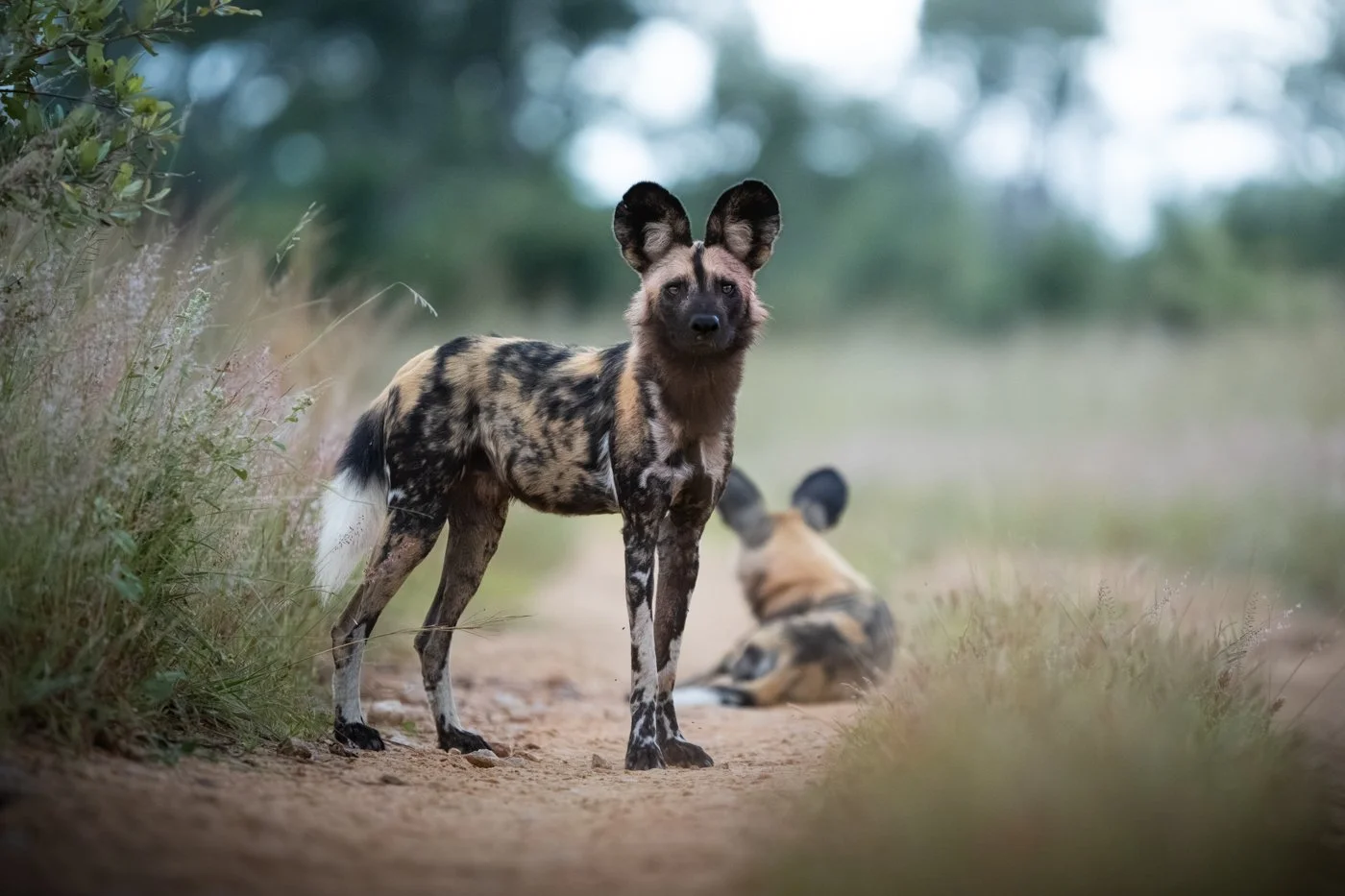
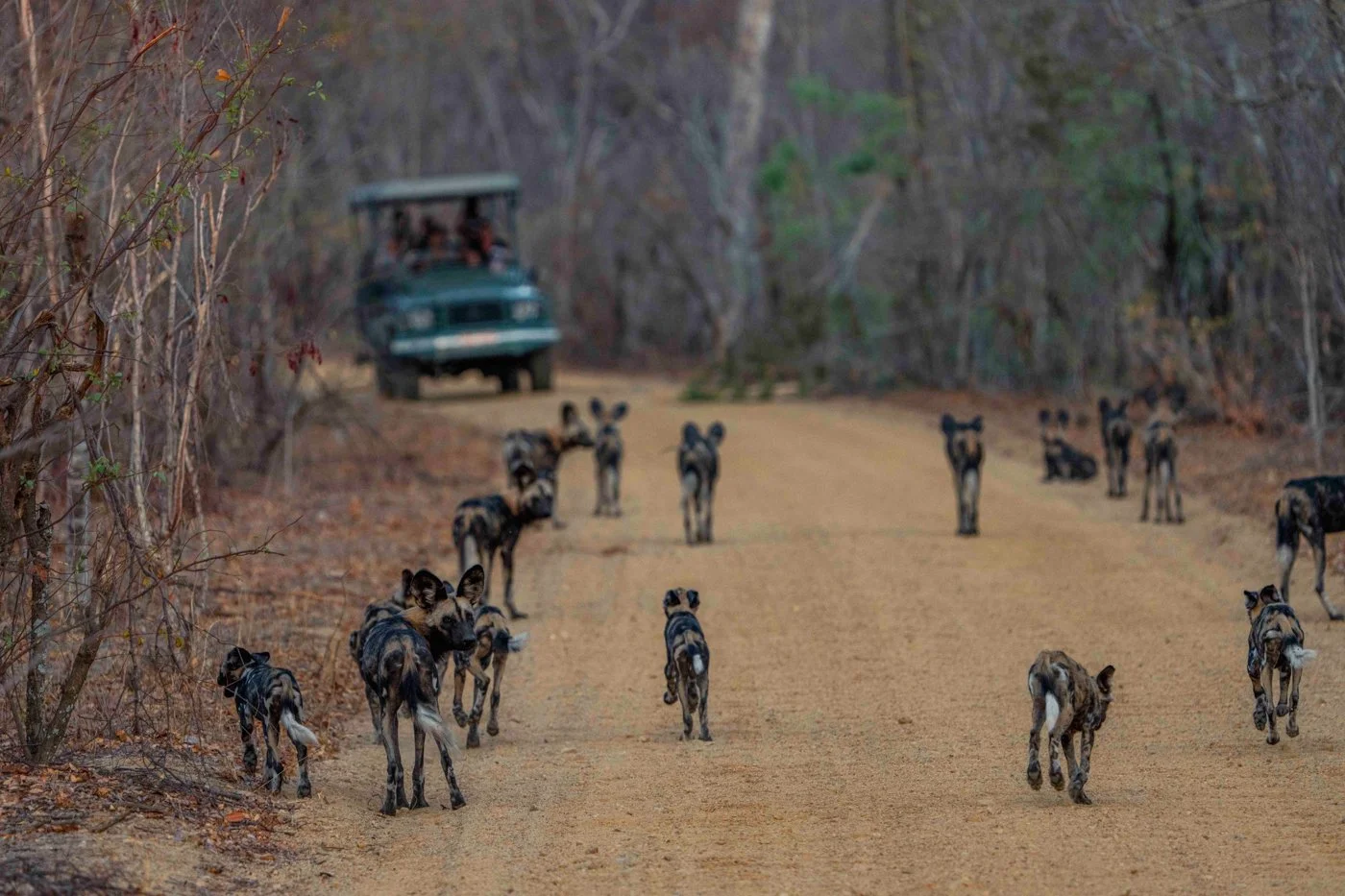
African wild dogs are one of the most misunderstood predators on the continent. Often confused with hyenas at a glance, they are a completely separate species, and looking at the two side by side reveals just how different they really are. Wild dogs are leaner, taller in the leg, with enormous rounded ears, long muzzles, and the distinctive mottled coat of black, tan, and white that gives them their other common name: African painted dogs.
They're also one of Africa's most fascinating animals. Their social structure, intelligence, and loyalty to one another set them apart from almost every other predator on the continent.
Here are some of the most interesting facts about African wild dogs, from the well-known to the genuinely surprising.
1. They Are the World's Most Successful Predator
This one tends to stop people in their tracks. African wild dogs hold the Guinness World Record for the most successful predator in the mammalian world, with hunting success rates of 80% or more. By comparison, lions succeed on roughly 25% of their hunts, wolves on around 20%, and polar bears on just 7%.
Their success comes down to teamwork. Wild dogs hunt as a coordinated pack, communicating constantly through body language and a range of vocalisations, and they can take down prey of vastly different sizes, from small antelope to kudu several times their own weight.
When you watch a pack hunt, the precision is genuinely extraordinary.
2. They Are Often Confused With Hyenas (But They Shouldn't Be)
Wild dogs and hyenas are two completely separate species, with different ancestry, different behaviour, and different ecological roles. Hyenas are closer relatives of cats than dogs. Wild dogs are true canids, part of the same family as wolves, foxes, and domestic dogs, though they belong to their own unique genus, Lycaon.
Visually, the differences are obvious once you know what to look for. Wild dogs are leaner, have longer legs, larger rounded ears, and the painted-coat colouring that's unique to each individual. No two wild dogs have the same markings.
3. They Have One of the Most Loyal Social Structures in the Animal Kingdom
This is where wild dogs really set themselves apart from other predators.
A wild dog pack will never abandon an injured, sick, or elderly member. If a pack member can't keep up, the rest of the pack will stay with them, bring food back to them, and protect them until they are able to travel again. This level of care for vulnerable individuals is rarely seen in any other predator species.
The community ties within a pack are remarkable. They greet each other with elaborate, energetic rituals before every hunt, they share food readily, and decisions about when to move and where to hunt appear to be made collectively, sometimes through what researchers have described as "voting" behaviour involving sneezes.
4. They Are Cooperative Breeders
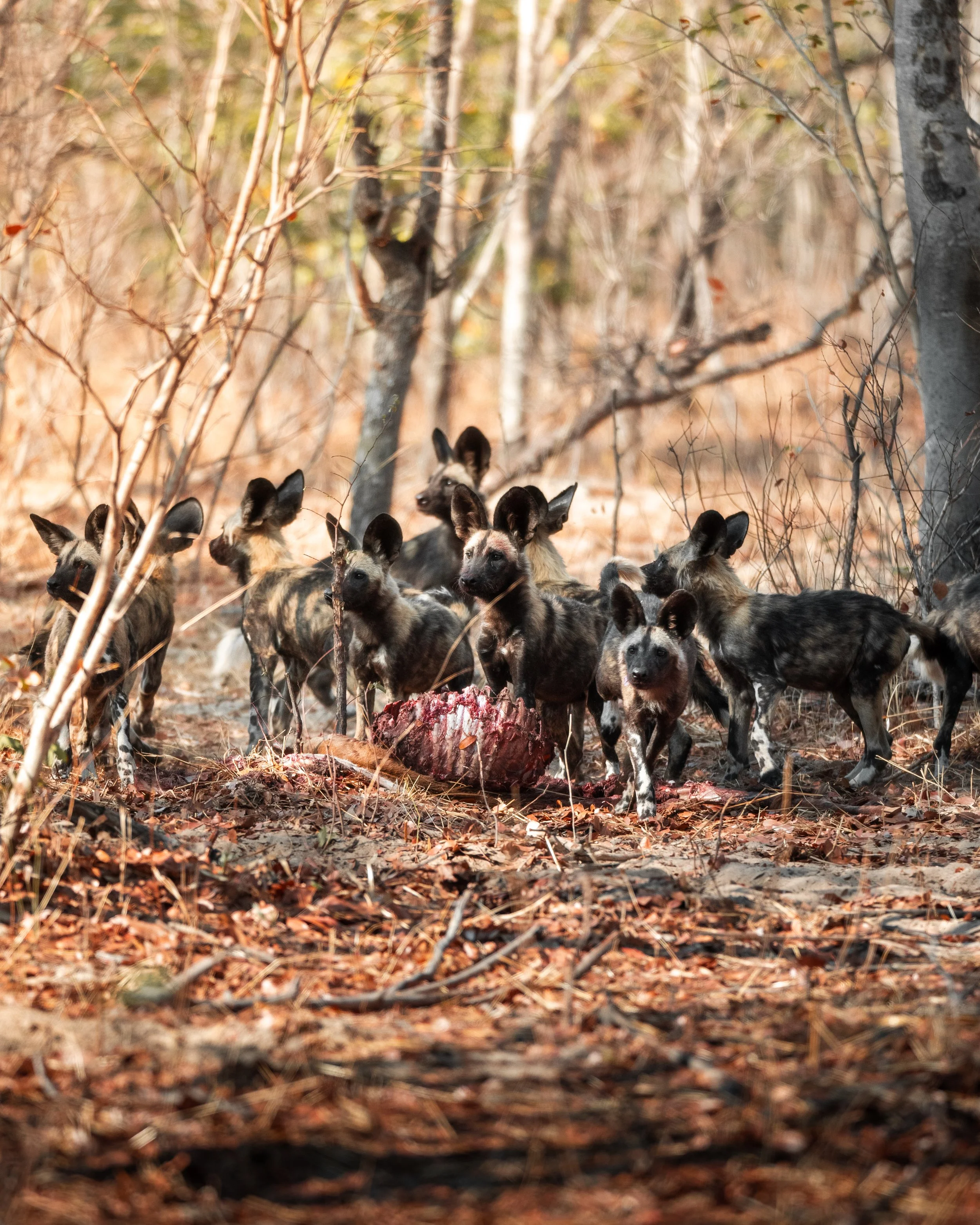
In a wild dog pack, only the alpha female and alpha male breed. The rest of the pack, often grown siblings and other relatives, helps raise the puppies. This system is similar to that of meerkats, and it serves an important purpose.
Most pack members are related, so restricting breeding to a single pair helps prevent inbreeding. When younger dogs are ready to breed themselves, they will typically leave the natal pack and join unrelated dogs to form a new one. It's not uncommon for dispersing males and females from different packs to meet up and establish entirely new groups.
5. Sometimes There Are Two Breeding Females in a Pack
Here's a lesser-known fact: while the alpha female is usually the only breeding female, there are recorded instances where a beta female has been allowed to breed alongside her. When this happens, packs can grow to very large sizes, with two simultaneous litters being raised by the same supportive group.
It's a fascinating exception to the rule, and one that researchers continue to study.
6. Each Wild Dog Has a Unique Coat
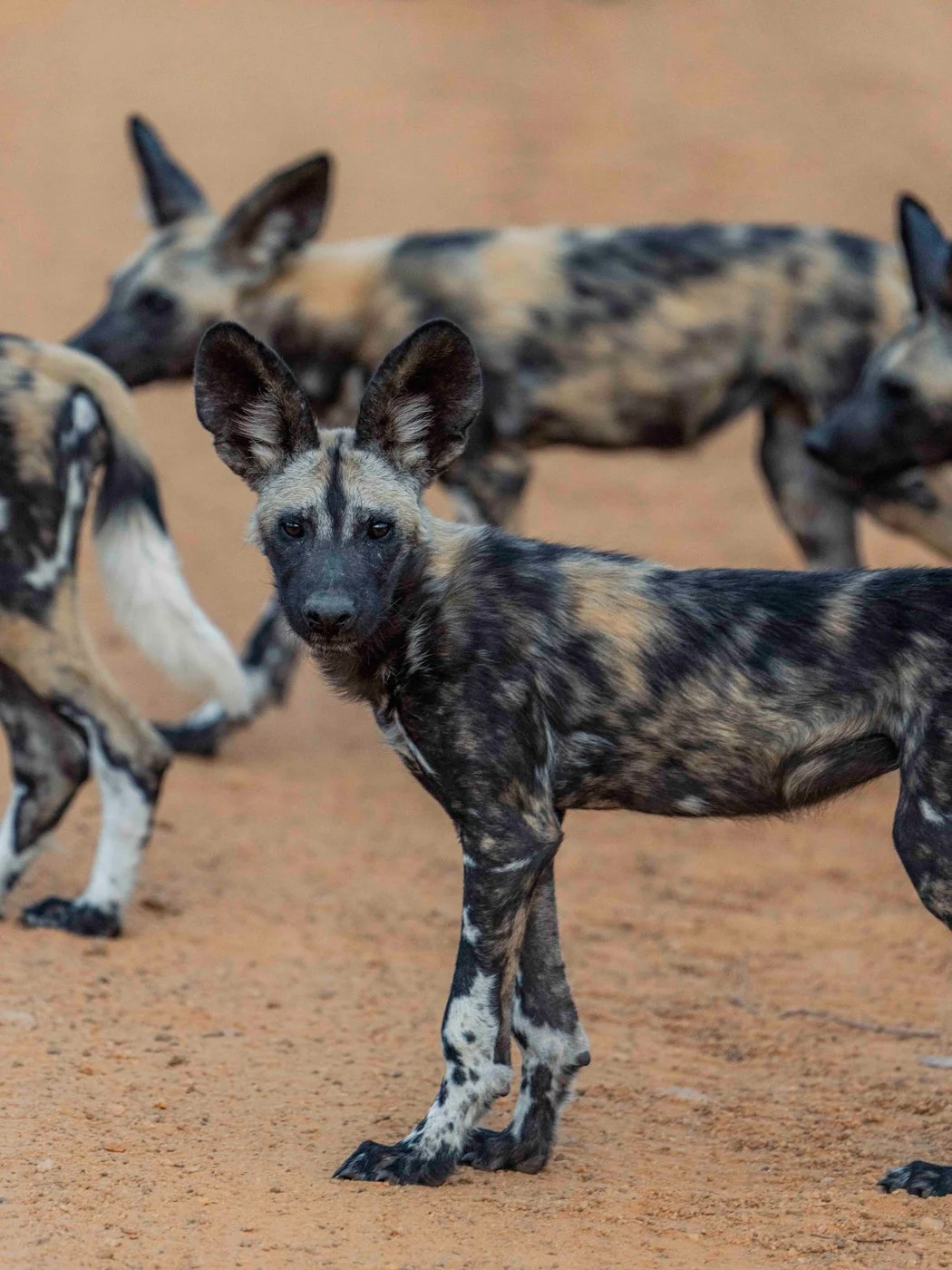
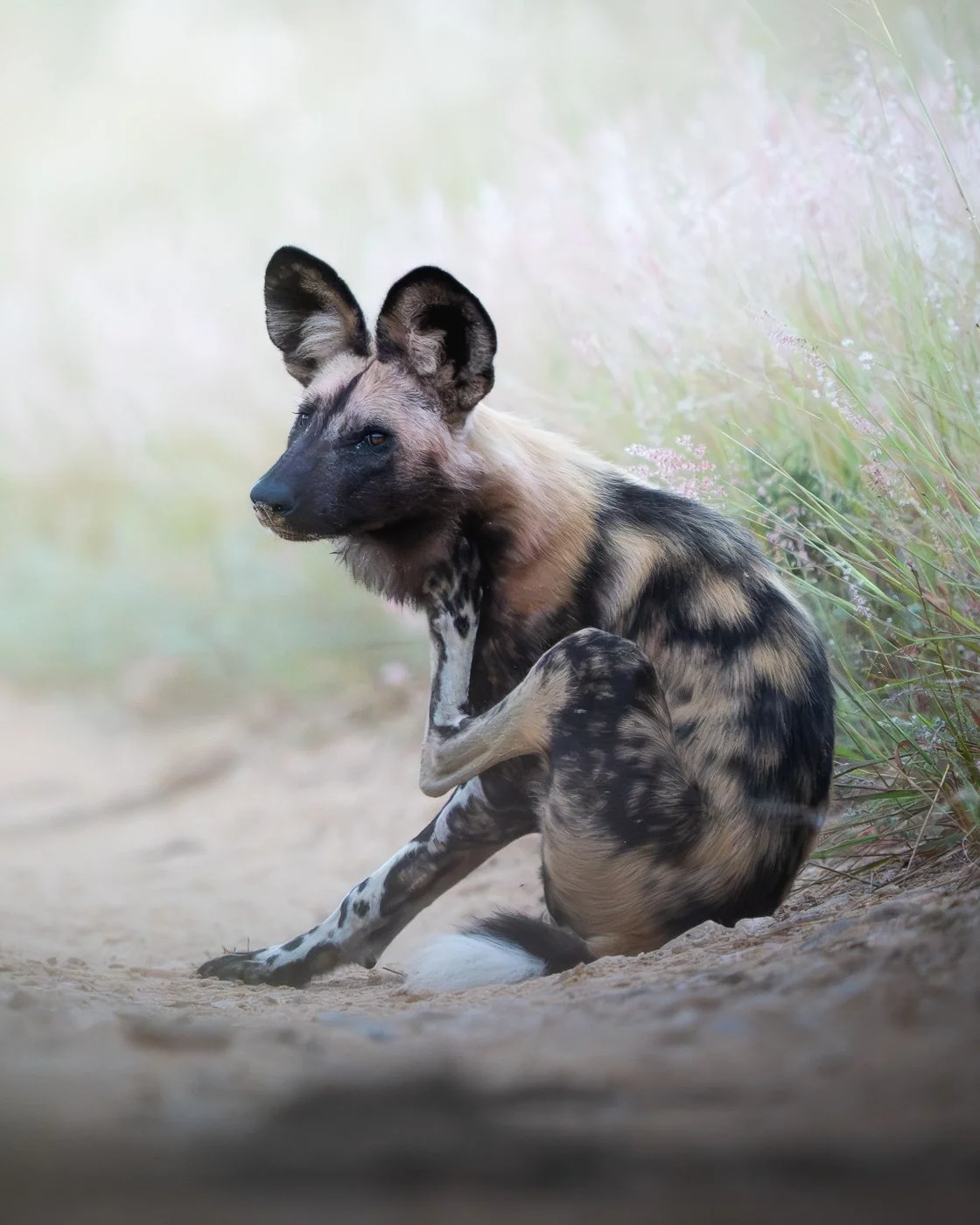
No two African wild dogs have the same coat pattern. The blotches of black, tan, white, and yellow are entirely individual, which is how researchers and guides identify specific dogs in the field. This is also why "painted dog" became a popular alternative name.
For wildlife photographers, this individuality is part of what makes wild dogs so rewarding to photograph. Every dog has its own distinct look.
7. They Communicate Through Sneezes (Yes, Really)
Researchers studying wild dog packs in Botswana documented behaviour that looks remarkably like democratic decision-making. Before a hunt, pack members gather and "sneeze" at one another. The more sneezes recorded, the more likely the pack is to commit to the hunt.
Whether or not it's truly a vote in the human sense, it's a clear example of just how sophisticated their communication is.
8. They Regurgitate Food to Feed Their Puppies
In most predator species, the strongest and most dominant animals eat first. Wild dogs do the opposite. After a successful hunt, pack members swallow large pieces of meat whole and return to the den, where they regurgitate the food for the puppies and any pack members who stayed behind to guard them.
This regurgitation system is one of the clearest examples of how the pack prioritises the survival of the next generation, and it's a behaviour wild dogs share with their wolf cousins.
9. They Hunt as a Team
Wild dogs are exceptional team hunters, and their success comes from coordination, communication, and tactical intelligence.
Depending on the situation, a pack will either gang up on prey directly, with different dogs taking on different roles to bring down a single animal, or they will create what's best described as organised chaos. By splitting into smaller groups and approaching from multiple angles, they confuse and disorient herds, forcing prey to make mistakes that the pack can capitalise on.
This adaptability is part of why their hunting success rate is so high. Wild dogs read the situation, adjust their strategy, and execute as a coordinated unit. The pack functions as a single hunting organism.
Conservation Status: Endangered
For all their success as hunters, African wild dogs are one of the most endangered carnivores on the continent. Fewer than 7,000 wild dogs remain across Africa, and their numbers continue to decline.
The main threats include:
Habitat loss and fragmentation, which forces packs into smaller and more isolated ranges
Conflict with farmers, where wild dogs are sometimes killed in retaliation for livestock losses
Disease, particularly rabies and canine distemper, which can wipe out entire packs when transmitted from domestic dogs
Snaring, both deliberate and accidental, which kills countless wild dogs each year
Zimbabwe, and Hwange National Park in particular, is one of the most important remaining strongholds for the species. The vast, connected wilderness of Hwange supports several thriving packs, and Zimbabwe's commitment to anti-poaching and conservation has made it one of the best places on earth to see wild dogs in the wild.
Seeing Wild Dogs With Amalinda Safari Collection
Hwange National Park is widely regarded as one of Africa's premier destinations for wild dog sightings, and Amalinda Safari Collection's three Hwange properties (Sable Valley Lodge, Ivory Lodge, and Khulu Bush Camp) all sit in prime territory for encountering them.
Wild dog sightings are never guaranteed, as packs cover huge distances and move quickly. What makes Hwange special is the genuine possibility of finding them, and the chance to watch an active pack on the move is something most safari travellers describe as a career-highlight wildlife encounter.
Amalinda's guides are deeply experienced in tracking wild dogs and reading their behaviour, and Mother Africa Trust's conservation work in the Hwange region directly supports the protection of the species through anti-poaching patrols, snare removal, and community education.
Visit Painted Dog Conservation (PDC)
Guests staying at any of Amalinda's Hwange properties can also visit Painted Dog Conservation (PDC), one of the most respected wild dog conservation organisations in Africa. Based in the Hwange region, PDC runs anti-poaching units, rehabilitates injured and orphaned wild dogs, and operates education programmes for local communities and visiting school groups.
A visit to PDC offers travellers a rare behind-the-scenes look at the conservation work that keeps Zimbabwe's wild dog population thriving, and it's one of the most meaningful ways to deepen a Hwange safari beyond the game drives themselves.
Plan a Wild Dog Safari in Hwange
If wild dogs are on your safari wishlist, Hwange should be at the top of your destination list. To plan a wild dog focused itinerary with Amalinda Safari Collection, including a visit to Painted Dog Conservation, get in touch and we'll help you build a trip that maximises your chances of an encounter while supporting the conservation work that keeps these extraordinary animals alive.