
Matopos Rhino Tracking Guide: What to Expect on Foot with Zimbabwe's White Rhinos
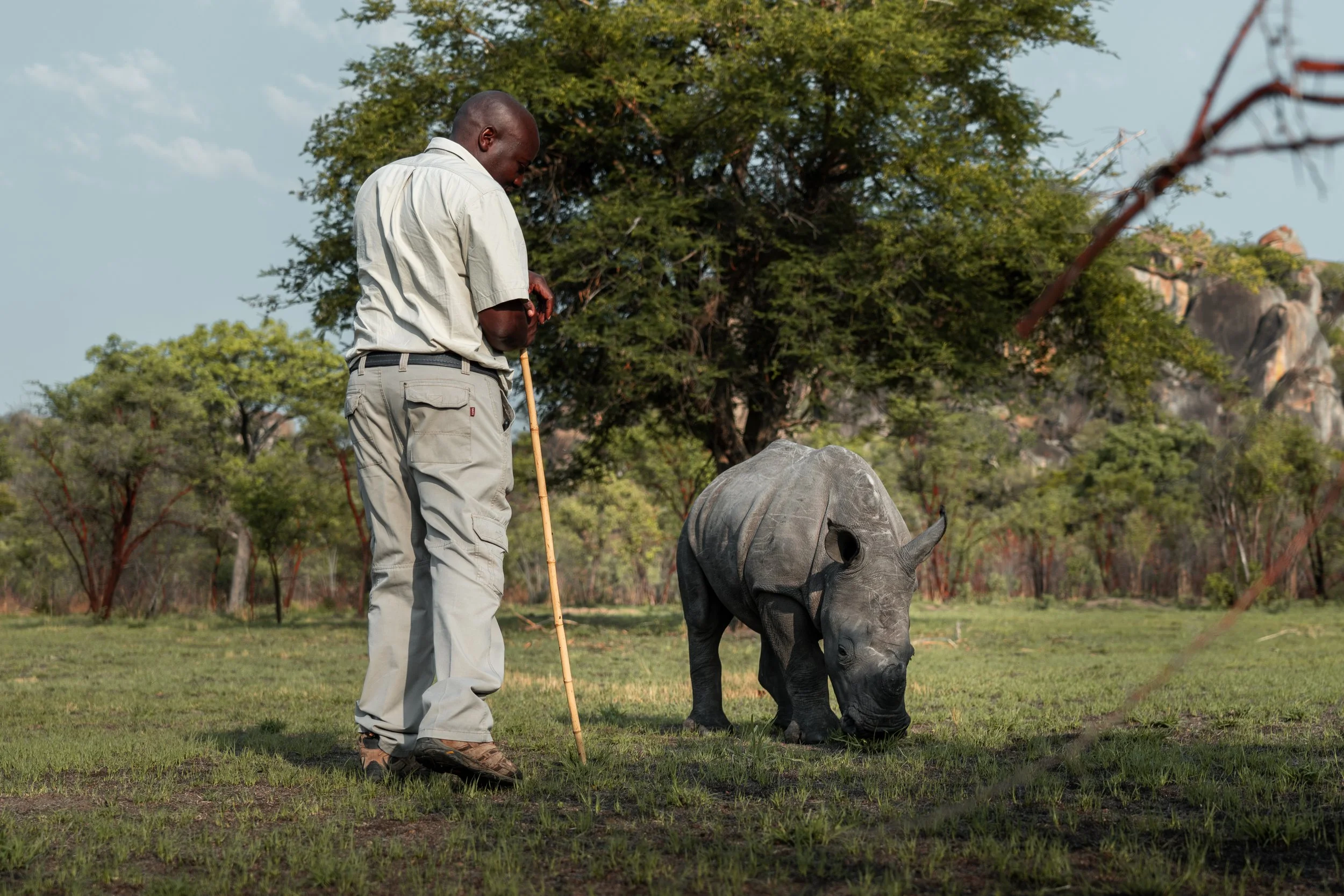
There are few wildlife experiences left in the world that can match the quiet intensity of tracking rhino on foot. In Zimbabwe's Matopos National Park, that experience is still possible, and it remains one of the most powerful encounters a safari traveller can have.
This guide covers everything you need to know about rhino tracking in Matopos, from what to expect on the day, to when to go, to how your visit supports the conservation of one of Africa's most endangered species.
About Matopos National Park
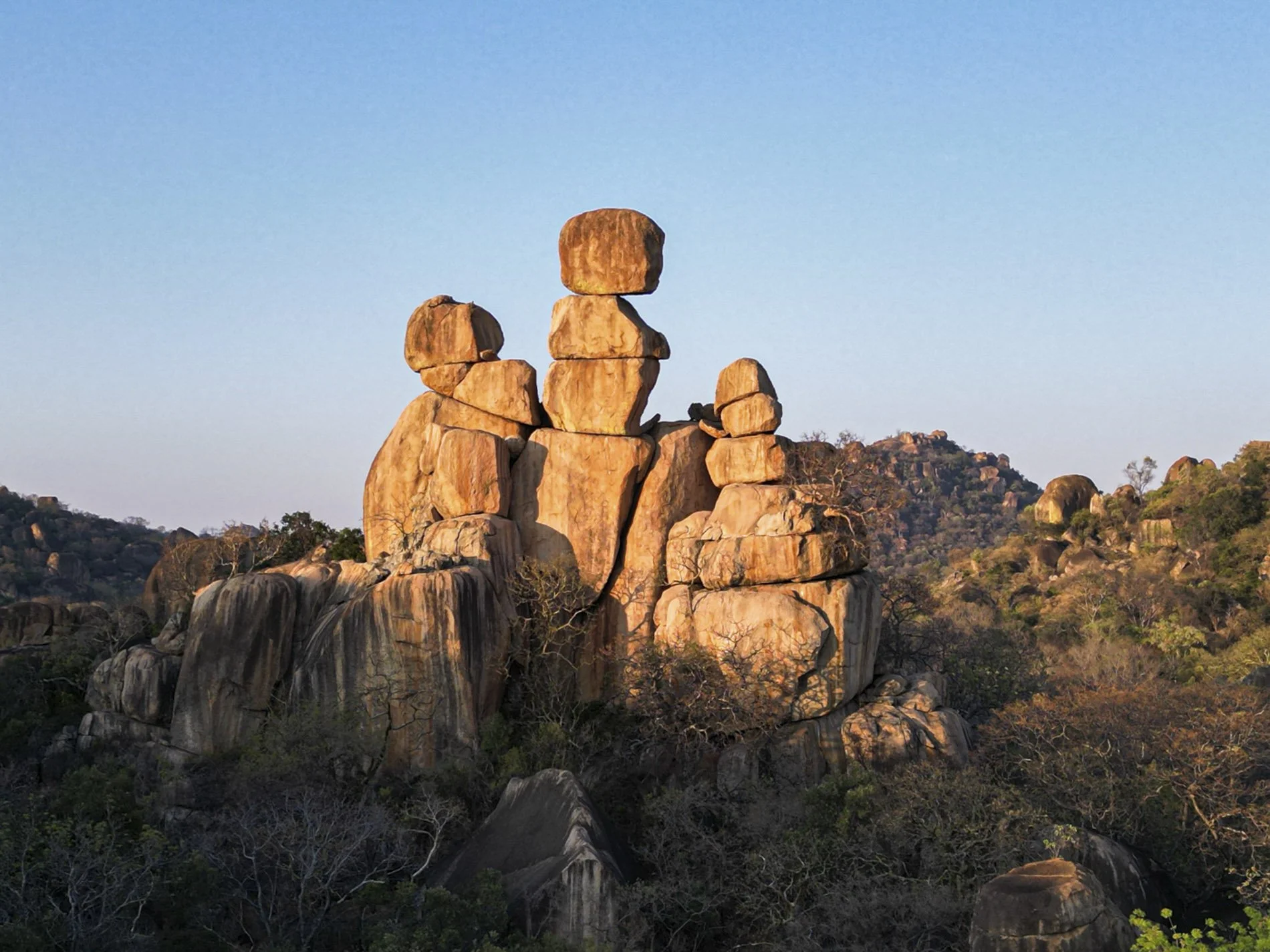
Matopos National Park (also spelled Matobo) is Zimbabwe's oldest national park, a UNESCO World Heritage Site set across a dramatic landscape of granite boulders, ancient hills, and open valleys. Located about an hour south of Bulawayo, it's a place of deep cultural and natural significance.
The park is home to some of Africa's most important San rock art, with paintings dating back thousands of years tucked into caves and shelters across the hills. It also holds one of the continent's highest concentrations of leopard and black eagle, alongside its most famous residents: white rhino.
Why Matopos Is the Place to Track Rhino
Matopos is one of the last places on earth where you can track white rhino on foot, accompanied by expert guides and trained rangers. The terrain itself is part of what makes it special. The granite kopjes and wooded valleys create natural corridors that rhino move through, and the open ground between boulders allows for safe, respectful viewing distances.
Unlike vehicle-based rhino sightings in larger parks, tracking on foot creates a fundamentally different experience. You learn to read tracks in the sand, identify dung middens, listen for movement in the bush, and approach with the kind of stillness that brings you into the rhino's world rather than disturbing it.
For many travellers, it's the most memorable moment of their entire safari.
The Experience: What to Expect on a Tracking Day
Rhino tracking in Matopos typically begins in the cool of the morning, when rhino are most active and the granite hasn't yet absorbed the day's heat.
After a light breakfast, you'll set off with your guide and a trained tracker. The team will already have intelligence on rhino movements from the previous day, gathered by anti-poaching units who patrol the park around the clock.
The pace is unhurried. You'll cover ground on foot, stopping frequently as your guide points out tracks, scat, broken branches, and other signs that tell the story of which animals have passed through. Tracking is as much about reading the landscape as it is about spotting the animal at the end.
When rhino are located, you'll approach quietly, downwind, with your guide leading the way. Sightings are usually from a respectful distance, often closer than expected, and the silence of the encounter is something most travellers describe as profoundly moving.
A typical tracking experience lasts between three and five hours, depending on conditions and how quickly rhino are located.
Best Time of Year to Track Rhino in Matopos
Rhino tracking is available year-round in Matopos, but conditions vary by season.
The dry season (May to October) is generally considered the best time. The bush is thinner, tracks are easier to follow, and rhino tend to gather around reliable water sources. Temperatures are also cooler, making the walking more comfortable.
The green season (November to April) offers lush landscapes and excellent birdlife, but tracking can be more challenging as vegetation thickens and rhino move more widely. Mornings remain pleasant, though afternoons can be hot.
For first-time trackers, the dry season offers the highest probability of success and the most comfortable conditions.
What to Wear and Bring
Practical preparation makes a real difference on a tracking day. Recommended kit includes:
Neutral-coloured clothing (khaki, olive, grey), avoiding white, black, and bright colours
Long trousers and a long-sleeved shirt to protect against scratches and sun
Sturdy, broken-in walking shoes or light hiking boots
A wide-brimmed hat and high-SPF sunscreen
A small daypack with water (your guide will usually carry the main supply)
Binoculars (8x42 is ideal)
A camera with a zoom lens, kept ready but quiet
Insect repellent
Leave perfumes, colognes, and strongly scented toiletries at the lodge. Rhino have an excellent sense of smell.
Safety and Guide Expertise
Zimbabwe has one of the most rigorous guide training programmes in Africa, and Matopos guides are among the country's finest. Becoming a fully licensed walking guide requires years of study, supervised field experience, and notoriously demanding exams covering ecology, animal behaviour, and firearm proficiency.
On a tracking outing, you'll be accompanied by both a guide and a tracker, and often a ranger from the anti-poaching unit. Safety briefings are thorough, and the team will explain exactly how to behave during a sighting before you set off.
Rhino tracking in Matopos has an excellent safety record, and the guides' deep knowledge of individual rhino behaviour means encounters are managed with extraordinary care.
Conservation: Why Your Visit Matters
Tracking rhino in Matopos is more than a wildlife experience. It's a direct contribution to one of Africa's most important conservation stories.
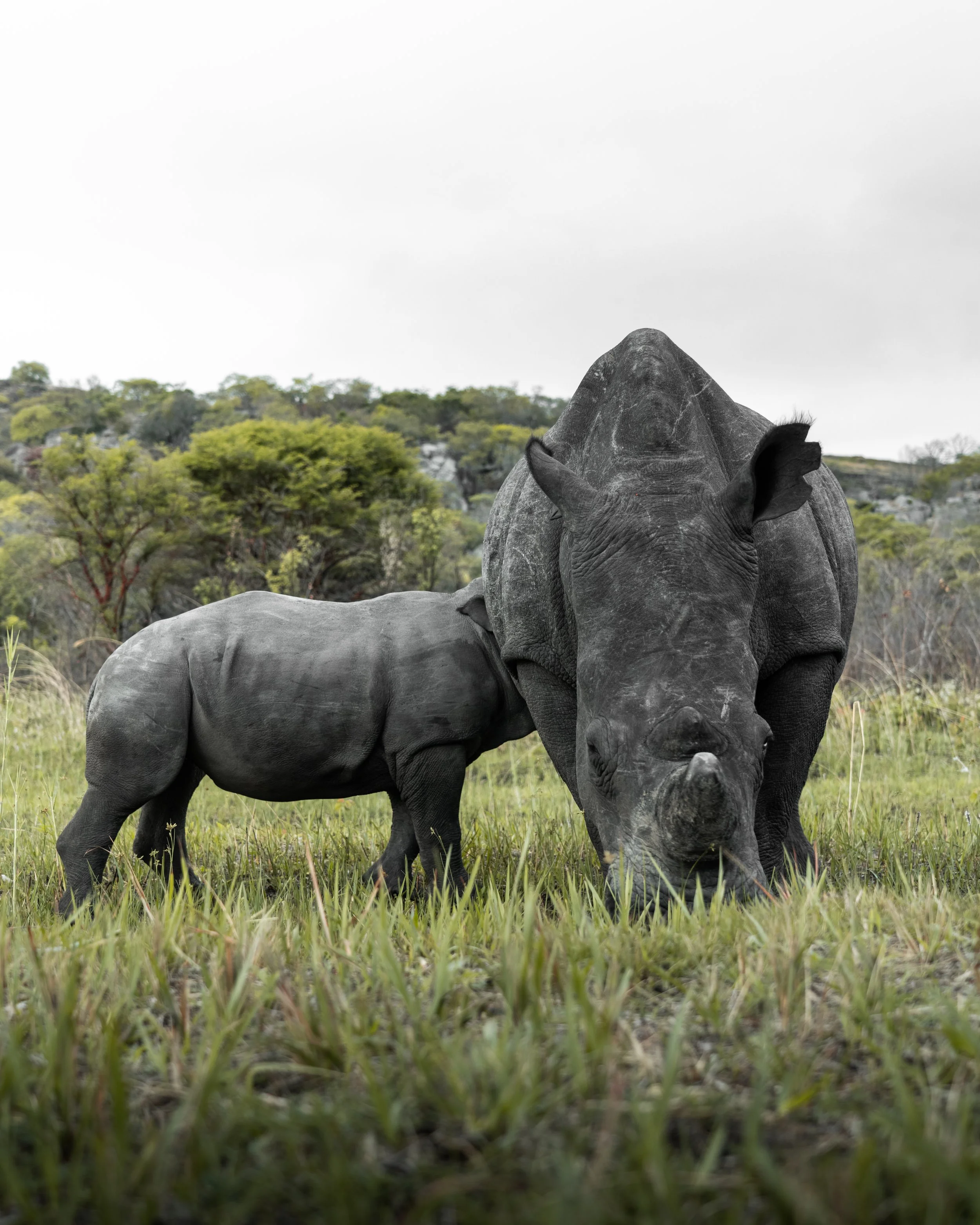
White rhino populations across the continent have been devastated by poaching driven by demand for rhino horn. Matobo Hills is home to one of the last remaining populations of both black and white rhino in Zimbabwe, and protecting them requires constant, well-funded effort.
When you book a rhino tracking experience, you're funding several things at once:
Daily patrols by dedicated anti-poaching units, including the Mother Africa Trust anti-poaching unit that co-manages the protected concession alongside the Forestry Commission
Rhino monitoring teams who track and protect critically endangered animals around the clock
Rhino conservation education programmes in local schools, ensuring future generations become custodians of Zimbabwe's wildlife
Community conservation initiatives that ensure local communities benefit from protecting wildlife rather than competing with it
The Mother Africa Trust
Amalinda Safari Collection's commitment to conservation runs deeper than most travellers realise. Since the collection was founded in 1990, the Mother Africa Trust has been the backbone of everything Amalinda does. Established as a registered nonprofit, Mother Africa Trust works in collaboration with Amalinda Safari Collection and donors to drive long-term, grassroots projects across the Matopos and Hwange districts.
Since 2010, Amalinda Safari Collection has donated close to one million dollars to community engagement and conservation through the Trust.
The work spans several areas:
Anti-poaching and rhino protection: Funding patrols, monitoring teams, and the lion-proof boma programme that protects livestock from predators, reducing retaliatory killings of lions in communities bordering Hwange
Education and school support: Funding scholarships, teacher salaries, school supplies, and educational trips that bring rural children into the national parks for guided rhino tracking, bird-watching, and conservation learning
Healthcare access: Supporting mobile clinics and local healthcare initiatives in villages around Hwange and Matobo where medical care is limited
Women's empowerment: Partnering with the Siyanyanga Women's Basket Weaving Group, the Mabale Community beekeeping initiative, and other income-generating projects that give women skills, independence, and a sustainable livelihood
Children's welfare: Long-standing support of Ethandweni Children's Home, including infrastructure, food security projects, and a solar-powered clean water system
Guests staying at any of Amalinda Safari Collection's lodges contribute directly to these programmes, and those who want to go further can join purpose-driven safaris that combine wildlife experiences with hands-on community and conservation engagement.
Rhino tracking in Matopos is a rare case where tourism is genuinely part of the conservation solution. The more travellers who come to see them, the more resources flow into protecting them and the communities that share their landscape.
Where to Stay for Rhino Tracking
The natural base for rhino tracking in Matopos is Amalinda Lodge, set in the Matobo Hills a short drive from Matopos National Park. The lodge is built into the granite boulders themselves, with rooms that blend into the ancient landscape and a strong cultural and conservation focus.
From Amalinda Lodge, rhino tracking can be arranged as part of a broader Matobo itinerary that includes visits to multiple San rock art cave sites (where you are often the only visitor), the Cecil Rhodes memorial at View of the World, and the My Beautiful Home bike ride through painted Ndebele villages.
For travellers wanting to combine Matobo with classic big-game safari, Amalinda's three Hwange properties (Sable Valley Lodge, Ivory Lodge, and Khulu Bush Camp) make the pairing seamless. Ask about our Stay 6 / Pay 5 special, which pairs Amalinda Lodge with any of the Hwange properties and includes the transfer from Matopos to Hwange.
Frequently Asked Questions
Is rhino tracking safe?
Yes, when conducted by qualified guides. Zimbabwe's guide training is among the most rigorous in Africa, and Matopos has an excellent safety record. You'll receive a thorough briefing before setting out.
How close do you get to the rhino?
Distances vary depending on terrain, wind, and the individual rhino. Sightings are typically at a respectful distance that allows for good viewing and photography without disturbing the animal.
Can children participate?
Rhino tracking generally requires participants to be older children or teenagers, as it involves walking quietly and following guide instructions carefully.
How fit do I need to be?
All fitness levels can participate in rhino tracking. The pace is unhurried, with some walking involved, and if you can manage a moderate hike, you can manage a tracking outing.
Are sightings guaranteed?
No wildlife sighting is ever guaranteed, but Matopos has one of the highest success rates for rhino tracking in Africa. Most guests have successful encounters.
Ready to Track Rhino in Matopos?
Few experiences in modern safari travel offer the depth, intensity, and conservation meaning of tracking rhino on foot in Matopos. It's an encounter that changes how travellers think about wildlife and the people who protect it.
To plan your rhino tracking experience with Amalinda Safari Collection, get in touch and we'll help you craft an itinerary that brings you closer to one of Africa's greatest conservation stories.