
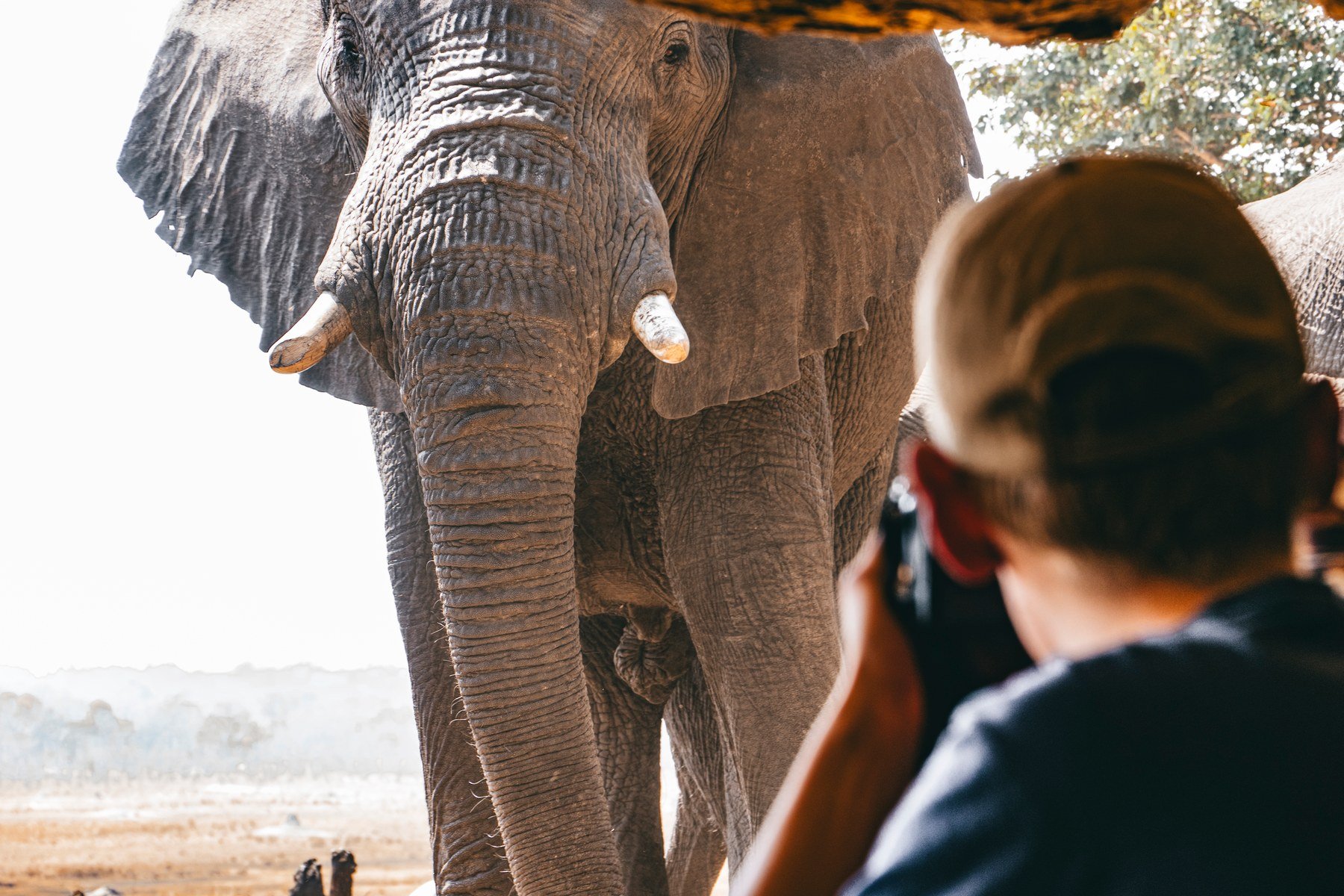
A photographer frames an approaching elephant.
There is a different rhythm to photographing wildlife from a hide. You settle into one place, watch the scene in front of you and leave room for something unexpected. An elephant photograph might begin with an entire animal in the frame and end with a detail: the curve of a trunk, a mud-covered ear or the folds around an eye.
At Sable Valley, our underground hide gives photographers another way to experience Hwange. Whether you travel with a camera bag or use your phone for holiday photographs, preparation helps you spend more time watching and less time finding the right button.
What is the underground hide at Sable Valley?
The hide sits in front of camp and offers a low-level perspective on visiting wildlife. It is available for viewing by day and at night, with seating areas and charging points for cameras and computers. Elephants are among its visitors, alongside buffalo, sable antelope and other wildlife.
Sable Valley is on our private concession outside the boundary of Hwange National Park. The camp has thatched rondavels and views across the Dete Vlei from the main area, making it a base for combining time in the hide with other safari activities.
Wildlife moves freely. The animals you see, their distance from the hide and the duration of a visit will vary. Build your photography around what happens, rather than a photograph you expect to reproduce.
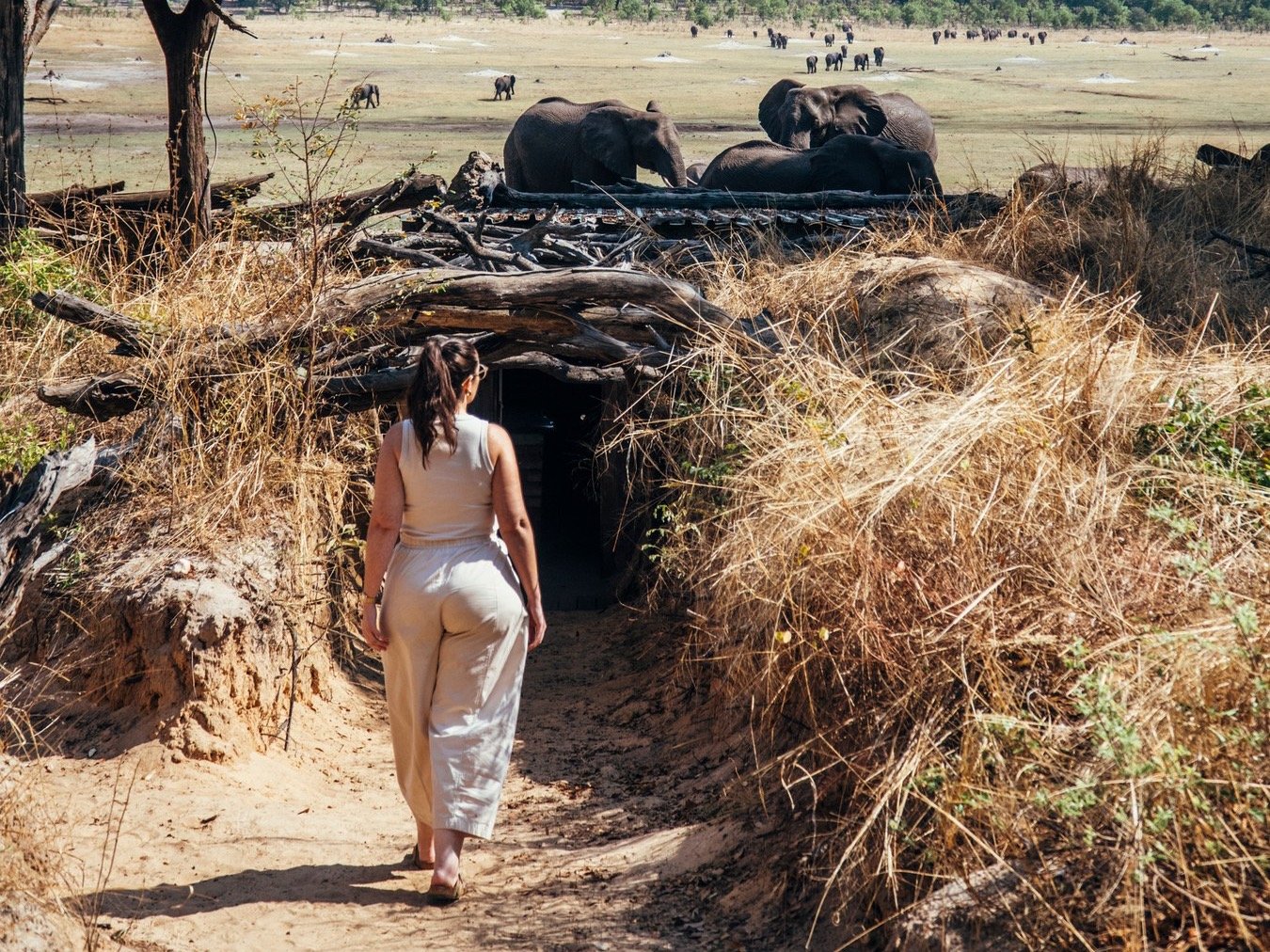
The entrance to Sable Valley’s underground hide.
Bring equipment you know how to use
Before travelling, practise changing focus modes and reviewing images on the camera you plan to bring. A familiar setup is easier to manage when an animal moves into an interesting position.
A zoom lens gives you choices as the scene changes: a wider composition to include several animals, or a closer frame to study a detail. If you have more than one lens, consider the photographs you enjoy making before filling your bag. Ask our team about luggage arrangements for your particular transfers, especially if you are carrying substantial camera equipment.
Charge batteries, carry spare memory cards and bring a lens cloth and protective camera bag. If you want to use a tripod, monopod or other support, check what will fit the hide's viewing positions before packing it. Do not assume specialist equipment is provided.
Begin with a simple composition
When an elephant comes into view, pause long enough to look around the edges of your frame. Have you accidentally cut off a trunk or foot? Is there room in the direction the animal is moving? Would a wider photograph tell more of the story?
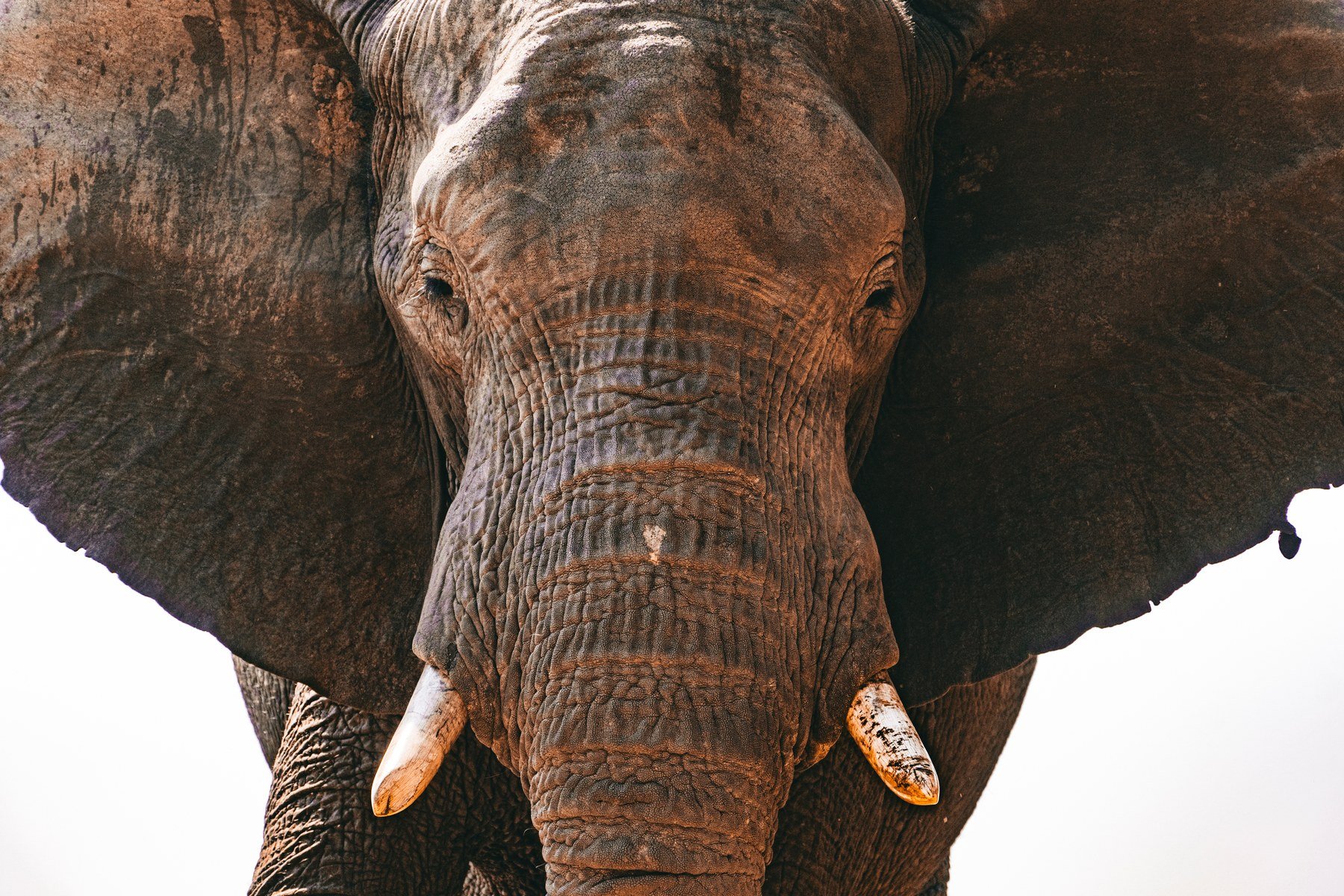
An eye-level view of an elephant at Sable Valley.
Try a small sequence rather than repeating one composition: a scene showing the surroundings, a portrait, then a closer detail if your equipment allows. If several animals are present, watch the spaces between them as well as the animals themselves.
This is a creative exercise, not a shot list to complete. A quiet moment can be just as worthwhile as an obvious piece of action.
Adjust to movement and available light
There is no single camera setting for elephant photography. An animal standing still and a moving trunk call for different choices, and the light can change while you watch.
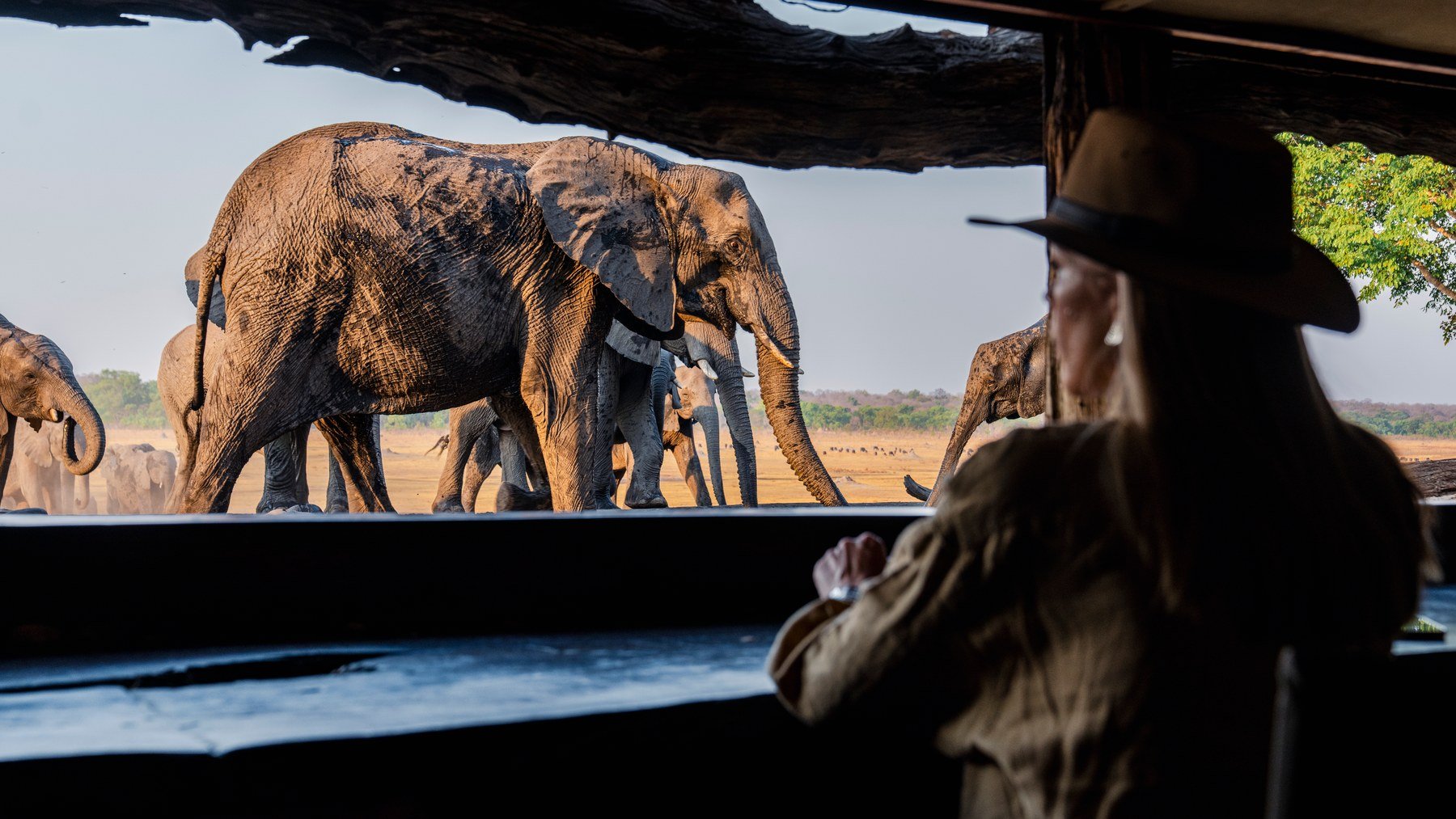
An elephant crosses the hide window in evening light.
As general photography guidance, use a shutter speed fast enough for the movement you want to capture. Continuous autofocus can help follow a moving subject; check that focus is on the animal rather than the background. Review an occasional image at a larger size to see whether it is sharp.
As light falls, a higher ISO may help maintain a useful shutter speed. Practise this at home so you understand how your camera responds. Night viewing does not automatically mean easy night photography: the result depends on the available light, movement and your equipment. Ask the team about current conditions and follow their direction on lighting and camera use.
Using a phone in the hide
A phone can record the wider scene and the experience of being there. Clean the lens before you start, tap your subject to focus and check that the exposure suits the scene. Review a few images rather than assuming that heavy digital zoom has preserved detail.
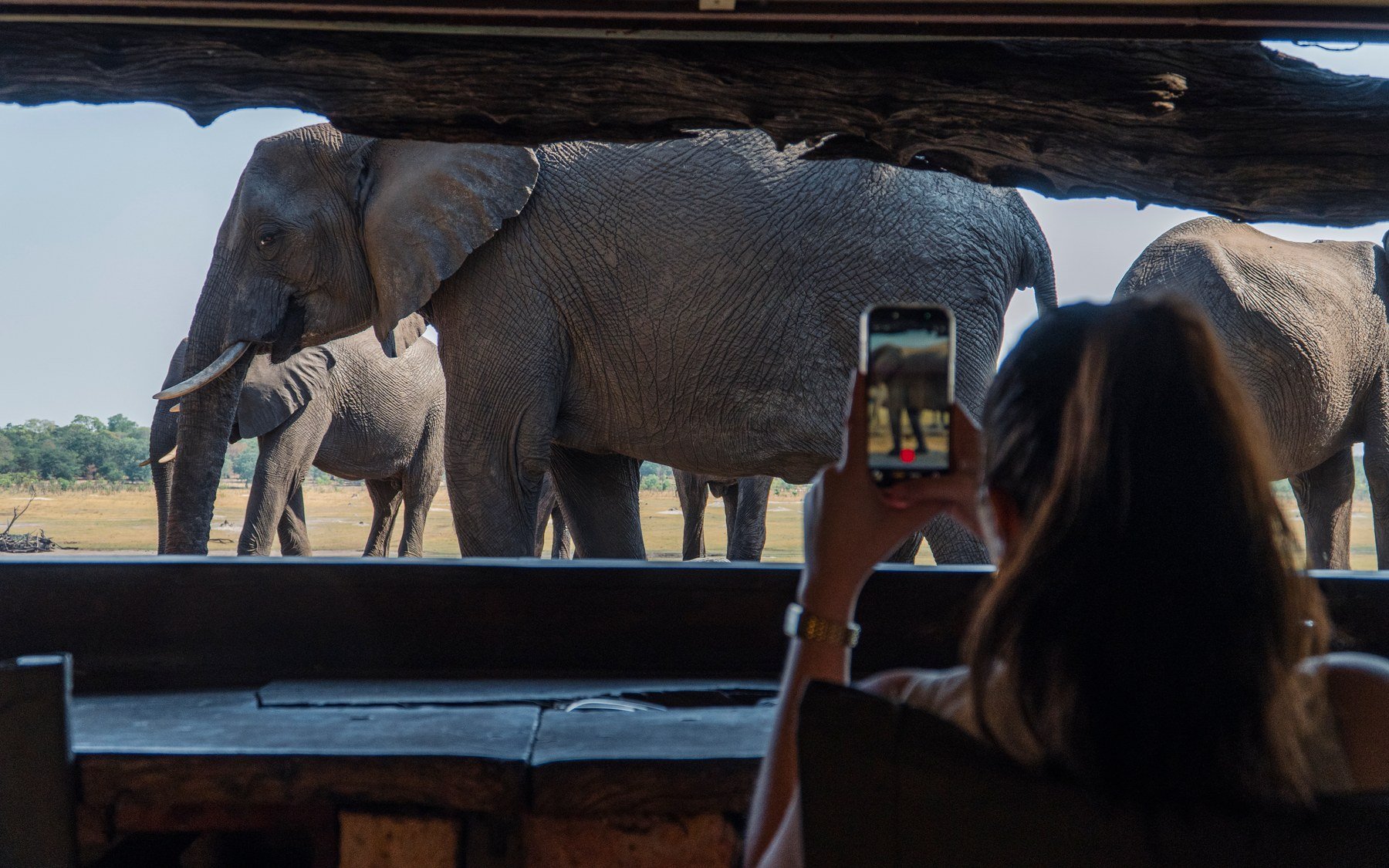
An elephant seen on a guest’s phone screen.
Short video clips are another option. Hold the phone steadily and let movement happen within the frame. Leave moments between photographs to watch without a screen.
Make time for the experience
Discuss your photographic interests with the camp team when planning your stay. They can help you understand how hide time fits around activities and explain the arrangements on the day. Follow their guidance, keep your equipment within the permitted space and be considerate of other guests using the hide.
For a broader look at planning your trip, read our Zimbabwe safari information. If the underground hide is a particular reason for your visit, contact our reservations team with your dates and interests. We can help you plan a Sable Valley stay with time to settle in and enjoy what unfolds.